◒
Spectral Analysis
A proprietary Dynamic Entropy approach is described in the source briefing as targeting phase anomalies, frequency-splicing artifacts and micro-pause patterns characteristic of synthetic audio.
AI Voice Guard is an infrastructure-level AI security layer designed to detect synthetic and manipulated audio in real time — before a call reaches its target device.
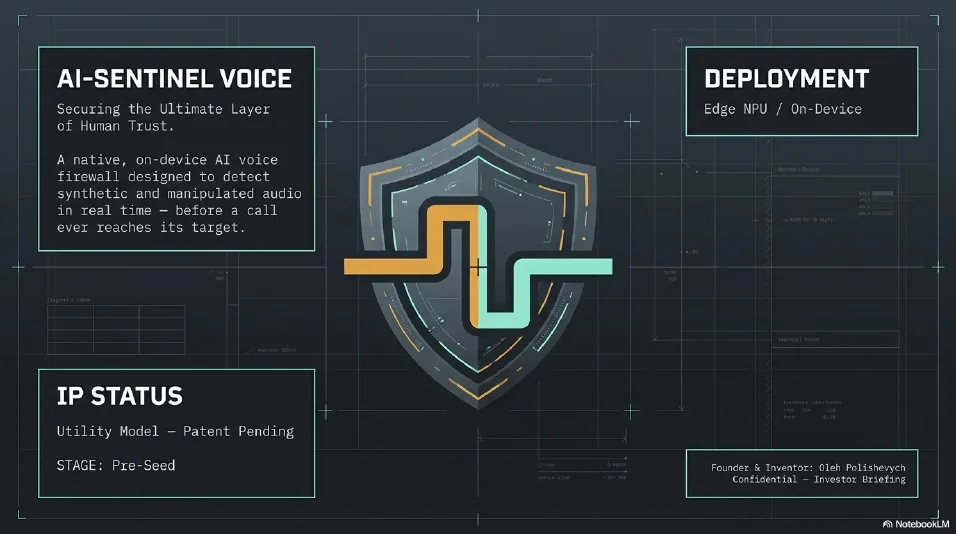
Voice cloning and real-time synthesis can impersonate executives, financial institutions, colleagues and family members convincingly enough to defeat human judgment and traditional controls.
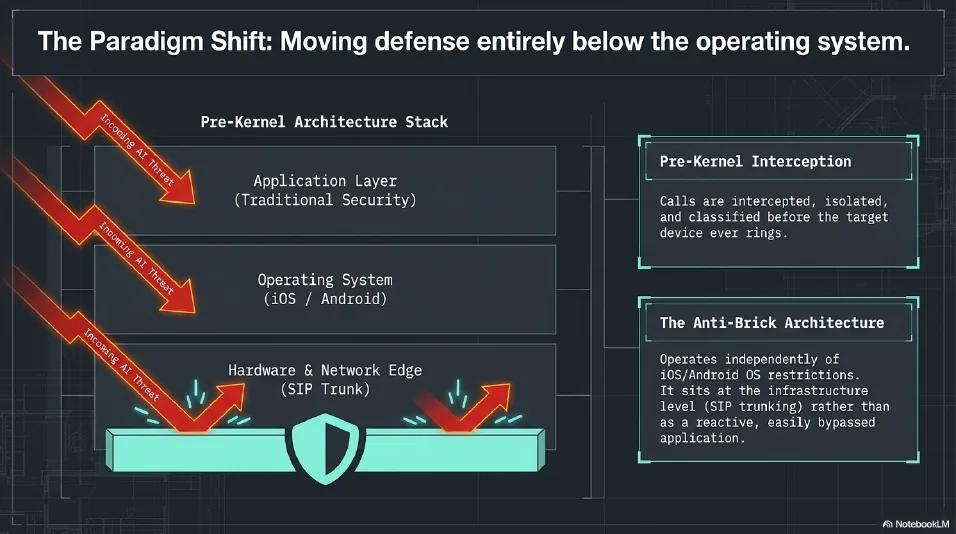
Instead of waiting for an application to react, AI Voice Guard intercepts inbound voice traffic at the infrastructure edge, before the target device rings.
Calls enter through SIP infrastructure and are classified before iOS or Android becomes part of the security path.
Inbound audio is isolated, analyzed and only verified low-risk calls are delivered to the end user.
The security layer is designed as infrastructure rather than an application feature, reducing dependence on device OS restrictions.
Two complementary analysis paths work together to identify synthetic-audio artifacts and manipulation intent.
A proprietary Dynamic Entropy approach is described in the source briefing as targeting phase anomalies, frequency-splicing artifacts and micro-pause patterns characteristic of synthetic audio.
Speech-to-text feeds a deterministic intent-recognition layer tuned to manipulation signals such as urgency and authority.
Combined spectral and semantic signals create a hybrid risk decision. Below-threshold scores route calls to isolation rather than simply allowing delivery.
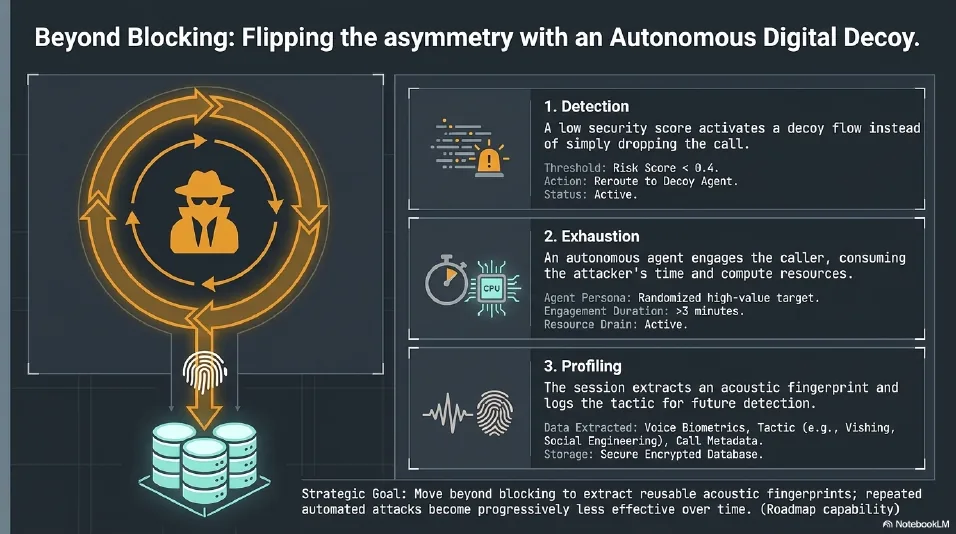
The roadmap describes an Autonomous Digital Decoy that can engage suspicious callers instead of simply dropping the session.
A low security score can activate a decoy flow.
An autonomous agent consumes attacker time and compute resources.
The roadmap includes acoustic-fingerprint and tactic extraction for future detection.
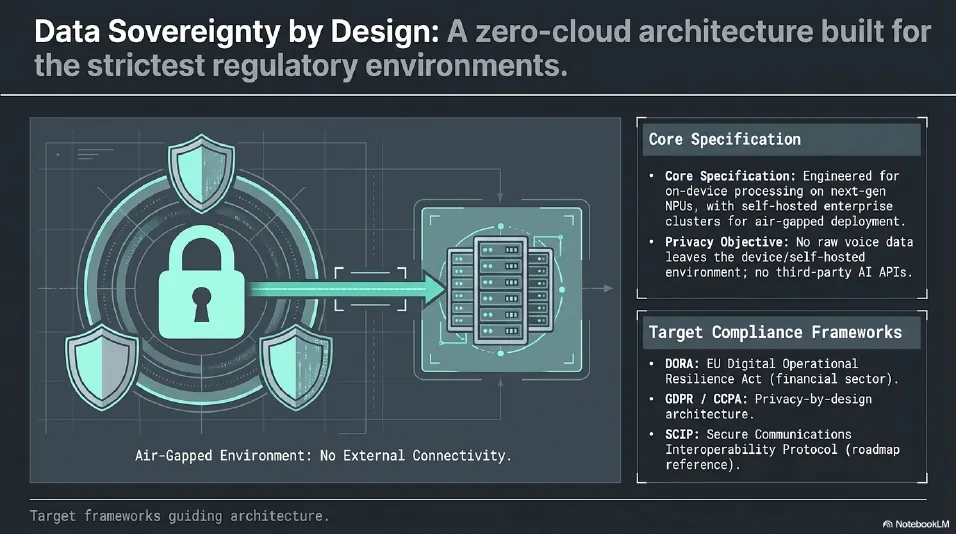
The architecture is positioned for on-device processing and self-hosted enterprise clusters, including air-gapped environments.
Designed around next-generation edge NPU execution.
Enterprise deployments can keep processing within their controlled environment.
No raw voice data is intended to leave the protected environment.
“The human voice must remain the ultimate symbol of trust.”AI Voice Guard — infrastructure-level voice protection
Request an investor, enterprise or technical briefing for architecture, pilots and deployment discussions.